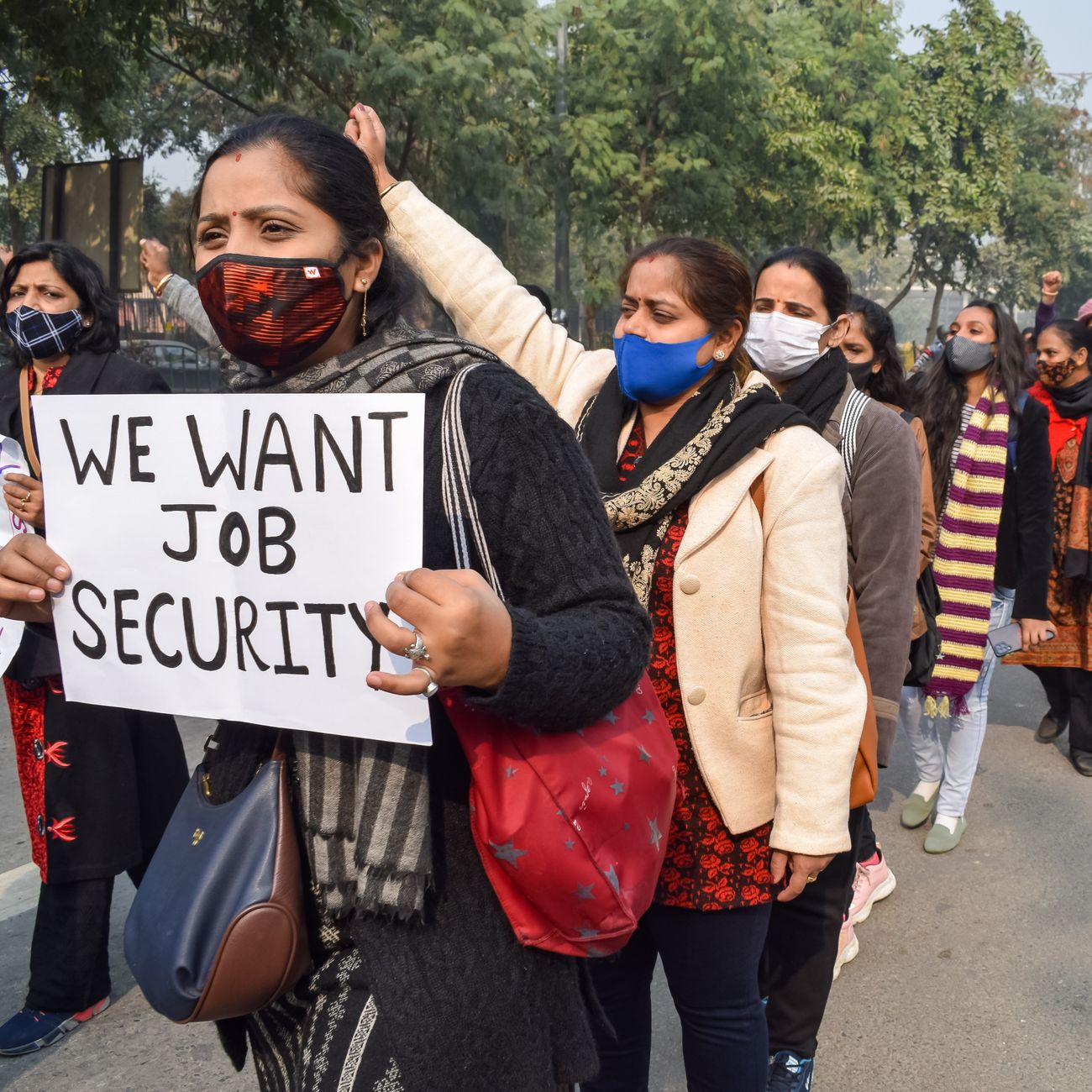

The integration of artificial intelligence into India's workforce is creating unprecedented challenges for entry-level job seekers, marking a fundamental shift in how companies approach hiring and skill requirements. As automation and AI tools become increasingly sophisticated, the traditional pathway from education to employment is undergoing dramatic transformation.
The Entry-Level Employment Crisis
India produces millions of graduates annually from its extensive network of colleges and universities, yet the gap between education and employability continues to widen. AI's arrival has accelerated this challenge by automating many tasks that were traditionally assigned to entry-level employees. Data entry, basic customer service, preliminary research, and routine administrative work—roles that once served as stepping stones for fresh graduates—are increasingly being handled by AI systems.
This shift has created a paradox in the job market. While India's technology sector continues to grow and attract global investment, the number of entry-level positions available to absorb fresh talent has not kept pace. Companies are discovering that AI tools can handle the volume of work that previously required multiple junior employees, leading to a recalibration of hiring needs.
Skills Gap Widens Further
The displacement of entry-level positions by AI is compounded by a persistent skills gap. Traditional educational curricula have struggled to keep pace with rapidly evolving industry requirements. Fresh graduates often lack practical experience with the very AI tools that are reshaping their prospective workplaces.
Employers now seek candidates who can work alongside AI systems rather than perform tasks AI can handle. This means entry-level positions that do exist require significantly higher skill levels than before. Critical thinking, complex problem-solving, creativity, and the ability to manage and interpret AI-generated outputs have become essential even for junior roles.
The situation is particularly acute in sectors like information technology, business process outsourcing, and financial services—historically major employers of entry-level talent in India. These industries were early adopters of AI automation, and the impact on junior hiring has been substantial.
Impact Across Sectors
Manufacturing and logistics have seen AI-driven automation reduce demand for entry-level workers in quality control, inventory management, and supply chain coordination. Customer service centers, once employing thousands of first-time workers, now rely heavily on chatbots and AI-powered response systems, with human employees primarily handling complex escalations.
The content and media industries face similar disruption. AI tools can generate basic reports, summaries, and even creative content, reducing the need for junior writers and researchers who traditionally handled preliminary work. Marketing and advertising firms use AI for data analysis, campaign optimization, and even creative ideation—tasks that provided valuable experience for entry-level marketing professionals.
The Experience Paradox
A concerning trend has emerged where companies increasingly expect even entry-level candidates to have prior experience—creating an impossible situation for fresh graduates. With fewer internship opportunities and entry-level positions available, young professionals struggle to gain the experience employers demand. This creates a vicious cycle that threatens to lock an entire generation out of formal employment.
Potential Solutions and Adaptations
Educational institutions are beginning to respond by incorporating AI literacy and practical technology skills into curricula. Industry-academia partnerships are expanding, though not at the pace required to address the scale of the challenge. Some companies are experimenting with apprenticeship programs and structured training initiatives designed to prepare candidates for AI-augmented workplaces.
The government has launched skill development programs aimed at making the workforce more adaptable, though implementation and reach remain concerns. There is growing recognition that reskilling and upskilling must begin during formal education rather than after graduation.
Looking Forward
The transformation of entry-level hiring in India represents both challenge and opportunity. While AI displaces certain roles, it also creates new categories of jobs that did not exist before. The key lies in ensuring that India's vast young population can access the training and opportunities needed to fill these emerging positions.
Companies that successfully navigate this transition will likely adopt hybrid models—combining AI efficiency with human creativity and judgment. For job seekers, adaptability, continuous learning, and digital literacy are no longer optional but essential for career survival and growth in an AI-integrated economy.
The resolution of India's entry-level hiring challenge will significantly influence the country's economic trajectory and social stability in the coming decades, making it one of the most critical policy and business concerns of our time.