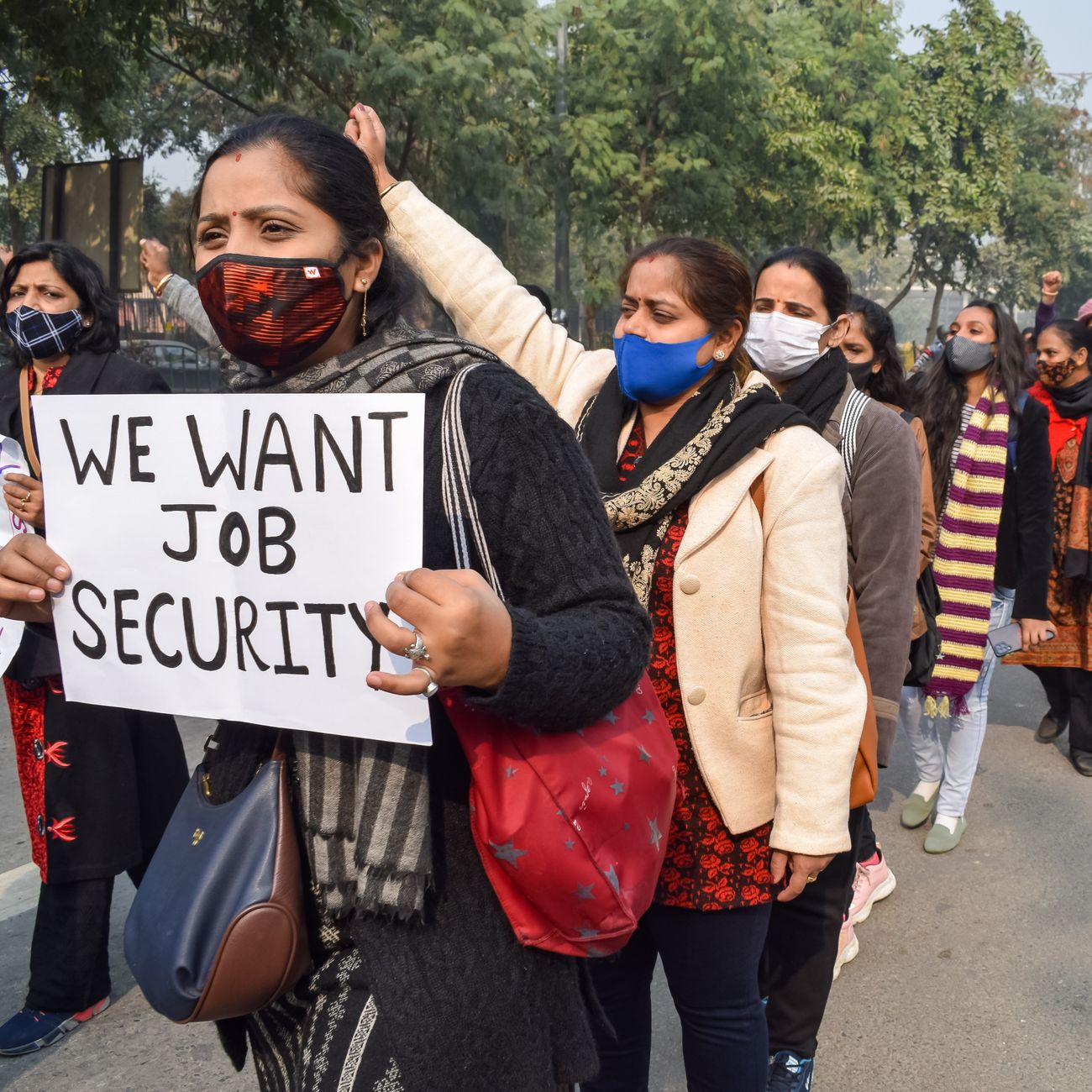

The technology sector in India is experiencing an unusual paradox. On one hand, we're witnessing unprecedented excitement around artificial intelligence breakthroughs, with companies announcing ambitious AI projects and "moonshot" initiatives. On the other, tech hiring has noticeably slowed, leaving thousands of skilled professionals wondering where the promised opportunities have disappeared.
This disconnect between AI's transformative promise and actual job creation reveals several underlying tensions in India's tech ecosystem that deserve closer examination.
The AI Investment Versus Hiring Equation
Technology companies worldwide, including major Indian IT services firms and startups, have been pouring resources into AI research and development. However, this investment hasn't translated into proportional hiring growth. The reason is straightforward: AI development requires fewer, highly specialized professionals rather than large teams of traditional software engineers.
Companies are increasingly seeking candidates with expertise in machine learning, natural language processing, and data science—skills that remain scarce even in India's vast talent pool. Meanwhile, demand for conventional development roles has plateaued or even declined in some segments.
Economic Headwinds and Cautious Spending
The global economic uncertainty of the past two years has made technology companies significantly more conservative with their hiring budgets. Indian IT services firms, which employ millions, have been particularly affected as their international clients—especially in banking, retail, and technology sectors—have reduced discretionary spending.
This caution extends to AI projects themselves. While companies announce ambitious initiatives, actual implementation often proceeds slowly, with organizations preferring to experiment with small teams before scaling up. This measured approach limits immediate hiring needs.
The Automation Irony
Perhaps most ironically, AI itself is contributing to reduced hiring in certain categories. Automation tools powered by AI are increasingly handling tasks that previously required human intervention, from code testing to customer service and basic data analysis.
Organizations are discovering they can maintain or even increase productivity with smaller teams augmented by AI tools. This efficiency gain, while beneficial for business margins, directly impacts entry-level and mid-level hiring across various functions.
Skills Mismatch in the Market
India produces hundreds of thousands of engineering graduates annually, yet employers frequently cite a skills gap. Traditional computer science curricula haven't evolved quickly enough to match the AI-first approach many companies now demand.
Fresh graduates often lack practical experience with modern AI frameworks, cloud platforms, and the mathematical foundations required for advanced AI work. This mismatch means companies struggle to find suitable candidates even when they do have openings, particularly for specialized AI roles.
What This Means for Job Seekers
For professionals navigating this landscape, several strategies can help:
- Focus on upskilling in AI-adjacent areas like prompt engineering, AI tool integration, and understanding AI ethics and governance
- Develop hybrid skill sets that combine domain expertise with basic AI literacy
- Consider positions that involve working alongside AI systems rather than competing with them
- Look beyond traditional IT services firms to startups, research organizations, and emerging tech companies
- Build portfolios demonstrating practical AI project experience, even through personal or open-source projects
The Long-term Perspective
Despite current hiring slowdowns, the long-term outlook for tech employment in India remains cautiously optimistic. As AI systems mature and become more integrated into business processes, new categories of jobs will emerge—AI trainers, ethics specialists, integration experts, and roles we haven't yet imagined.
The key question is whether the pace of job creation will match the disruption caused to existing roles. Historical technology transitions suggest that while new jobs do emerge, the transition period can be uncomfortable for those caught in the middle.
Regional and Sectoral Variations
It's worth noting that the hiring slowdown isn't uniform. Cities like Bengaluru, Hyderabad, and Pune continue to see demand for specialized AI talent, even as bulk hiring for traditional roles has declined. Similarly, sectors like healthcare technology, fintech, and agritech are exploring AI applications more aggressively than others, creating pockets of opportunity.
The split screen between AI moonshots and hiring realities reflects a technology sector in transition. While the promise of AI remains genuinely transformative, its immediate impact on employment has been more complex than many anticipated. For India's tech workforce, adaptation and continuous learning have never been more critical to remaining relevant in this rapidly evolving landscape.